Most british marketers agree that without clear goals and targeted communication, even the best email campaigns fall flat. With over 80 percent of digital marketers ranking email targeting as a major factor for campaign success, the pressure is on to hit the right audience at the right moment. This guide shows you how to create a results-driven, structured email sequence that turns subscribers into loyal customers while saving you time and effort.
Table of Contents
- Step 1: Define Your Campaign Goals And Audience
- Step 2: Map Your Email Sequence Timeline
- Step 3: Write Compelling Email Copy For Each Step
- Step 4: Set Up Automation In Your Email Platform
- Step 5: Test, Verify And Optimise Your Workflow
Quick Summary
| Key Insight | Explanation |
|---|---|
| 1. Define clear campaign goals | Establish specific objectives for your email campaign to maintain focus and ensure measurable outcomes. |
| 2. Understand your target audience | Create detailed audience personas to craft personalised messages that resonate with specific consumer groups. |
| 3. Map out your email sequence | Design a strategic communication timeline that guides subscribers from initial contact to conversion opportunities. |
| 4. Write engaging email copy | Craft persuasive content for each email, ensuring it feels personalised and addresses recipients’ needs. |
| 5. Implement automation effectively | Leverage email platform automation to streamline communication and maximise engagement based on subscriber behaviours. |
Step 1: Define your campaign goals and audience
Successful email marketing demands precise targeting and strategic objective setting. Before crafting a single message, you need a crystal clear understanding of what you want to achieve and who will receive your communications.
Start by mapping out specific goals for your email campaign. Are you aiming to drive product sales, increase website traffic, nurture potential leads, or build stronger customer relationships? A robust email marketing strategy outlines the goals and target audience that will guide your entire approach. Professional marketers recommend selecting 1-3 primary objectives to maintain focus and measurability.
Understanding your target audience is crucial for creating messages that resonate with specific consumer groups. Develop detailed audience personas by considering demographics such as age, income, professional role, interests, and online behaviours. The more precisely you can define who will receive your emails, the more personalised and effective your campaign becomes.
Quick Tip: Create a simple spreadsheet tracking your campaign goals, including specific metrics like expected conversion rates, open rates, and engagement levels. This documentation helps you measure success objectively and refine future strategies.
By establishing clear goals and understanding your audience, you’re laying the groundwork for an email campaign that communicates with purpose and precision.
Step 2: Map your email sequence timeline
Creating a strategic email sequence timeline transforms random communications into a purposeful customer journey. This step is about designing a calculated progression that guides your audience from initial contact through to desired conversion.
Visual timelines help break down complex communication strategies into clear sequential stages, allowing you to plan precisely when and how each message will be delivered. Your timeline should typically include trigger points such as welcome emails, engagement messages, nurturing sequences, and conversion prompts. Consider spacing your emails strategically 2-3 days apart to maintain interest without overwhelming subscribers.
Developing a clear timeline makes it easier to track progression and compare different communication periods, much like mapping out a learning journey. Start by sketching a basic flow that includes initial contact, follow-up messages, educational content, and conversion opportunities. Each email should serve a specific purpose and build naturally upon the previous communication.
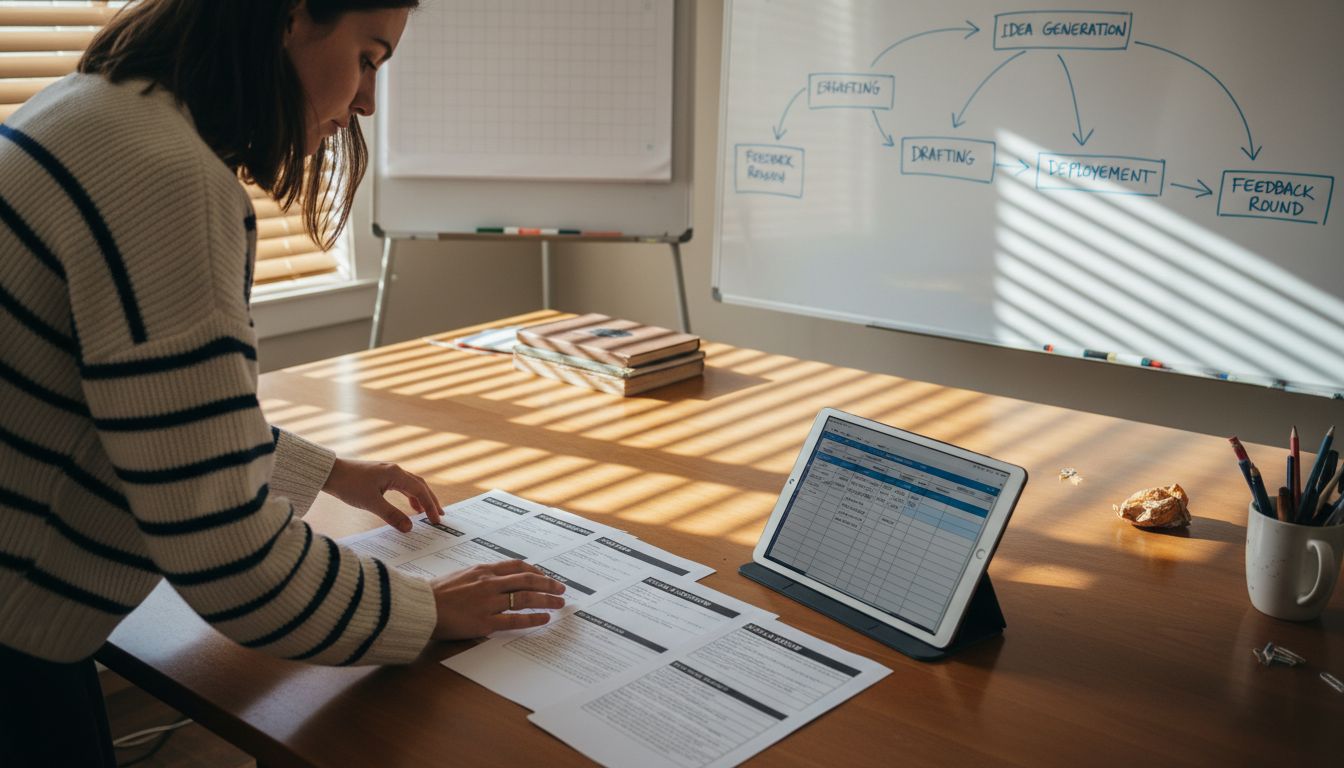
Quick Tip: Use a spreadsheet or project management tool to map out your email sequence, noting exact timing, purpose, and expected outcomes for each message. This structured approach prevents random messaging and ensures a coherent customer experience.
With a well-mapped timeline, you are setting the stage for a methodical and engaging email marketing strategy that speaks directly to your audience’s needs and interests.
Step 3: Write compelling email copy for each step
Crafting persuasive email copy is an art form that transforms simple messages into powerful communication tools. Your words will be the bridge connecting your audience to the value you offer.
Email marketing represents a powerful digital strategy for connecting with potential customers and driving meaningful engagement, which means every word must be deliberately chosen. Begin by understanding the specific purpose of each email in your sequence. Your welcome email should introduce and build trust, follow-up emails should provide additional value, and conversion emails should create a sense of urgency and clear next steps.
Each email should feel like a personalised conversation, not a generic broadcast. Maintaining regular communication helps keep customers loyal and prevents them from forgetting about your brand. Focus on creating a narrative arc across your email sequence, where each message builds naturally upon the previous one. Use conversational language, address pain points directly, and always centre your copy around the recipient’s potential gains.
Quick Tip: Write your emails as if you’re speaking to a single, specific person. Imagine your ideal customer sitting across from you and craft your message to speak directly to their needs and aspirations.
By developing a strategic, empathetic approach to your email copywriting, you transform mundane messages into compelling conversations that resonate and drive action.
Step 4: Set up automation in your email platform
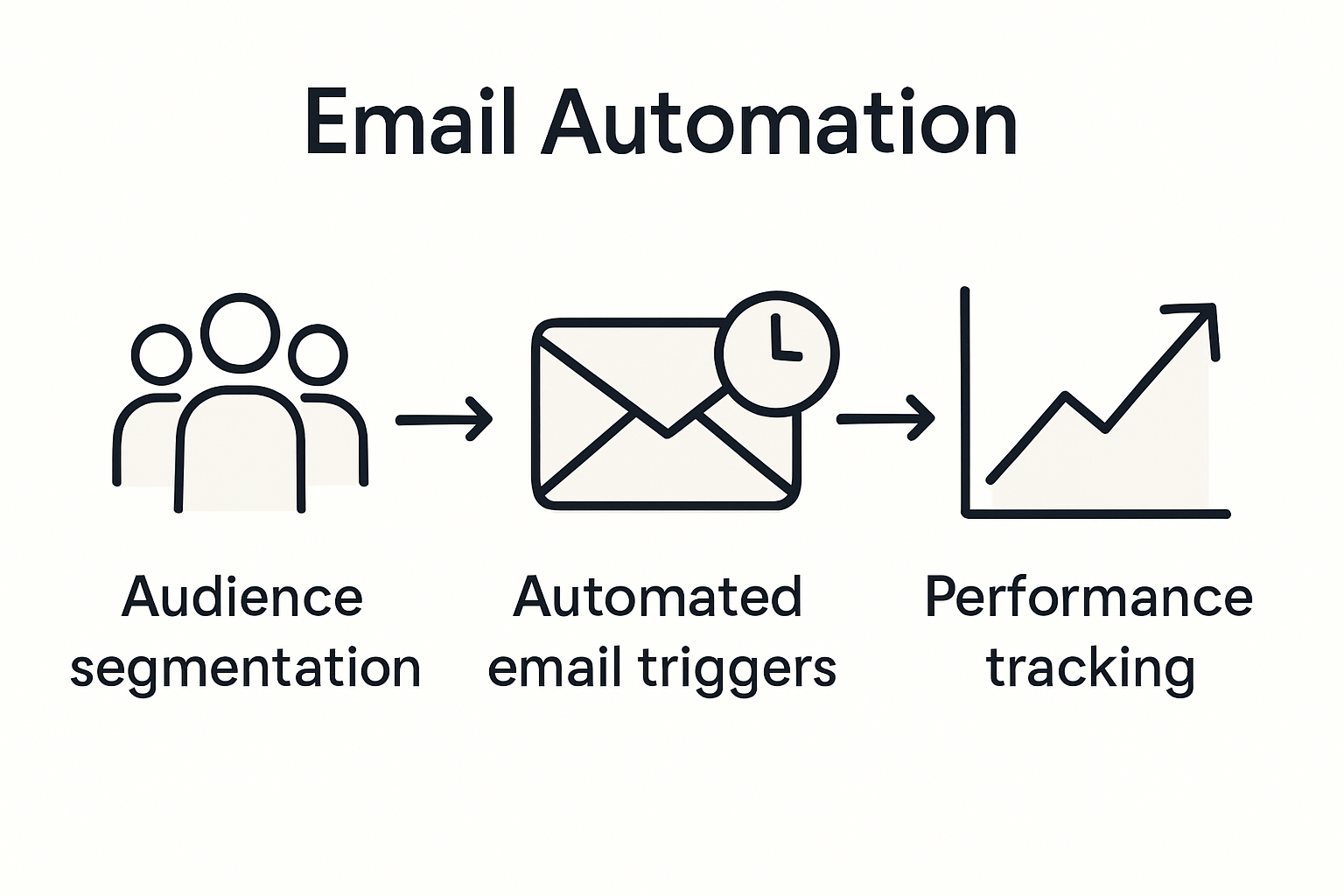
Automation transforms your email marketing from a manual, time consuming process into a streamlined, intelligent communication system. This step is about leveraging technology to deliver the right message to the right person at precisely the right moment.
Marketing automation involves sophisticated methods for segmenting, targeting, scheduling, and tracking marketing messages, enabling you to create intricate workflows that respond dynamically to subscriber behaviours. Begin by identifying the key triggers that will initiate your automated sequences such as welcome emails after sign up, follow up messages after purchases, or re-engagement campaigns for inactive subscribers.
Email marketing represents a powerful digital strategy for connecting with potential customers and driving meaningful engagement, which means your automation setup must be both strategic and flexible. Most email platforms offer visual workflow builders that allow you to map out complex communication paths. Look for features like conditional branching where different actions occur based on subscriber interactions such as opening an email, clicking a link, or making a purchase.
Quick Tip: Always test your automation sequences thoroughly before launching. Send test emails through your workflow to confirm each step triggers correctly and the messaging feels natural and coherent.
By mastering email platform automation, you create a self sustaining marketing engine that nurtures relationships and drives conversions with minimal ongoing effort.
Step 5: Test, verify and optimise your workflow
The final stage of your email sequence creation is a critical phase of refinement where data transforms your initial strategy into a precision marketing instrument. This is where you turn good intentions into measurable, repeatable success.
Email marketing represents a powerful digital strategy for connecting with potential customers and driving meaningful engagement, which means your testing approach must be systematic and data driven. Start by implementing A/B testing on critical elements such as subject lines, email content, send times, and call to action phrases. Create two variants of each element and analyse performance metrics like open rates, click through rates, and conversion percentages.
Your verification process should involve multiple layers of scrutiny. Track key performance indicators meticulously and look for patterns that reveal opportunities for improvement. Pay close attention to subscriber behaviour tracking metrics such as how long recipients spend reading your emails, which links attract the most clicks, and at what point subscribers might drop out of your sequence.
Quick Tip: Set up a spreadsheet to track your test results comprehensively. Document each variation, its performance metrics, and potential hypotheses about why certain elements performed better than others.
By approaching workflow optimisation as a continuous, data informed process, you transform your email sequence from a static communication tool into a dynamic, responsive marketing asset.
Build Your Profitable Email Campaign with Ease Today
Struggling to design an email sequence workflow that truly converts can feel overwhelming. The article highlights key challenges such as defining clear campaign goals, mapping engaging email timelines, and setting up powerful automation. These steps require time, strategy and the right tools to transform your messages into consistent income. You need solutions that save time and reduce complexity while helping you craft personalised campaigns that speak directly to your audience’s needs.
At Steve Pritchard Online, we provide beginner-friendly digital products specifically designed to help you start, grow and automate your online income streams with less hassle. Our collection includes AI-powered content tools, marketing templates and quick-start kits perfectly suited to building effective email sequences without tech headaches.
Start mastering your email marketing with practical tools that make setting up workflows straightforward and profitable. Visit Steve Pritchard Online now to explore resources that empower you to convert subscribers into loyal customers and grow your business faster. Don’t wait to turn your email campaigns into a reliable income source—take your first step today.
Frequently Asked Questions
What is an email sequence workflow?
An email sequence workflow is a structured series of emails sent to guide potential customers through their journey, from initial contact to conversion. Start by mapping out your sequence, ensuring each email serves a specific purpose that aligns with your campaign goals.
How do I define my campaign goals for email sequences?
To define your campaign goals, clearly identify what you hope to achieve, such as driving sales or increasing engagement. List 1-3 primary objectives and consider metrics like open rates and conversion rates to measure success.
What should I include in my email copy to make it compelling?
Compelling email copy should focus on the recipient’s needs, using conversational language that addresses their pain points. Craft your messages as if you’re speaking to a specific person, ensuring each email builds upon the previous one for better engagement.
How can I automate my email workflows effectively?
You can automate your email workflows by setting up triggers that respond to subscriber behaviours, such as welcome emails after signup. Use the visual workflow builder in your email platform to create, schedule, and refine your automated communication paths.
What metrics should I track to optimise my email sequence?
Key metrics to track include open rates, click-through rates, and conversion percentages. Regularly analyse this data and perform A/B testing on various elements to identify opportunities for improvement and refine your future email strategies.
How do I create audience personas for my email campaigns?
Creating audience personas involves collecting demographic information such as age, income, and interests to understand your target audience. Use this data to craft personalised messages that resonate with specific consumer groups, enhancing the effectiveness of your email campaigns.