A surprising number of british entrepreneurs are finding passive income success without learning complicated code or creating products from scratch. White label marketing opens doors for beginners across the globe, letting anyone tap into ready-made solutions and build a custom business with minimal technical effort. With over £50,000 potential annual earnings reported in this field, newcomers can quickly discover how simple strategies turn online ambitions into rewarding, low-risk ventures.
Table of Contents
- White Label Marketing Demystified For Beginners
- Types Of White Label Products And Services
- How White Label Marketing Models Work
- Earning Potential And Key Profit Factors
- Legal Issues, Mistakes, And Pitfalls To Avoid
Key Takeaways
| Point | Details |
|---|---|
| White Label Marketing Concept | Entrepreneurs can sell pre-produced products or services under their own brand, reducing development costs and technical barriers. |
| Digital vs. Physical Products | Digital products typically offer lower entry costs and higher profit margins compared to physical goods, which involve more significant investment and logistics. |
| Legal Considerations | Understanding intellectual property rights and maintaining clear contractual agreements are essential for mitigating risks in white label marketing. |
| Earning Potential | With strategic product selection and effective marketing, white label businesses can generate significant income, with earnings ranging from £50,000 to £150,000 annually. |
White Label Marketing Demystified for Beginners
White label marketing represents a strategic business approach that allows entrepreneurs to sell products or services produced by another company under their own brand name. At its core, this model enables individuals to launch businesses without significant upfront development costs or extensive technical expertise. White label strategies provide a streamlined pathway for market entry across multiple industries.
The fundamental mechanism involves partnering with an established provider who creates a product or service, which can then be rebranded and resold as your own. This approach works particularly well in digital domains like software platforms, marketing services, and content creation. Businesses can quickly expand their offerings by leveraging existing solutions, allowing entrepreneurs to focus on marketing and customer relationships rather than complex product development.
Key advantages of white label marketing include minimal initial investment, reduced risk, and accelerated business launch timelines. Entrepreneurs can select from pre-developed products across various sectors, customise branding elements, and establish their market presence without extensive technical knowledge. Market research platforms demonstrate how diverse industries successfully implement these strategies.
Pro tip: Start by identifying niche markets with high demand and low competition where white label products can provide immediate value to potential customers.
Types of White Label Products and Services
White label products encompass a diverse range of offerings across multiple industries, providing entrepreneurs with flexible business opportunities. Comprehensive product categories span electronics, consumer goods, software, and digital services, enabling businesses to quickly enter markets without extensive product development.
Digital services represent a particularly lucrative white label domain. These include marketing tools, social media management platforms, customer relationship management (CRM) software, and website design services. White label technology services allow entrepreneurs to offer sophisticated digital solutions without substantial technical infrastructure investments. Popular examples include email marketing platforms, search engine optimisation tools, and analytics dashboards that can be rebranded and resold.
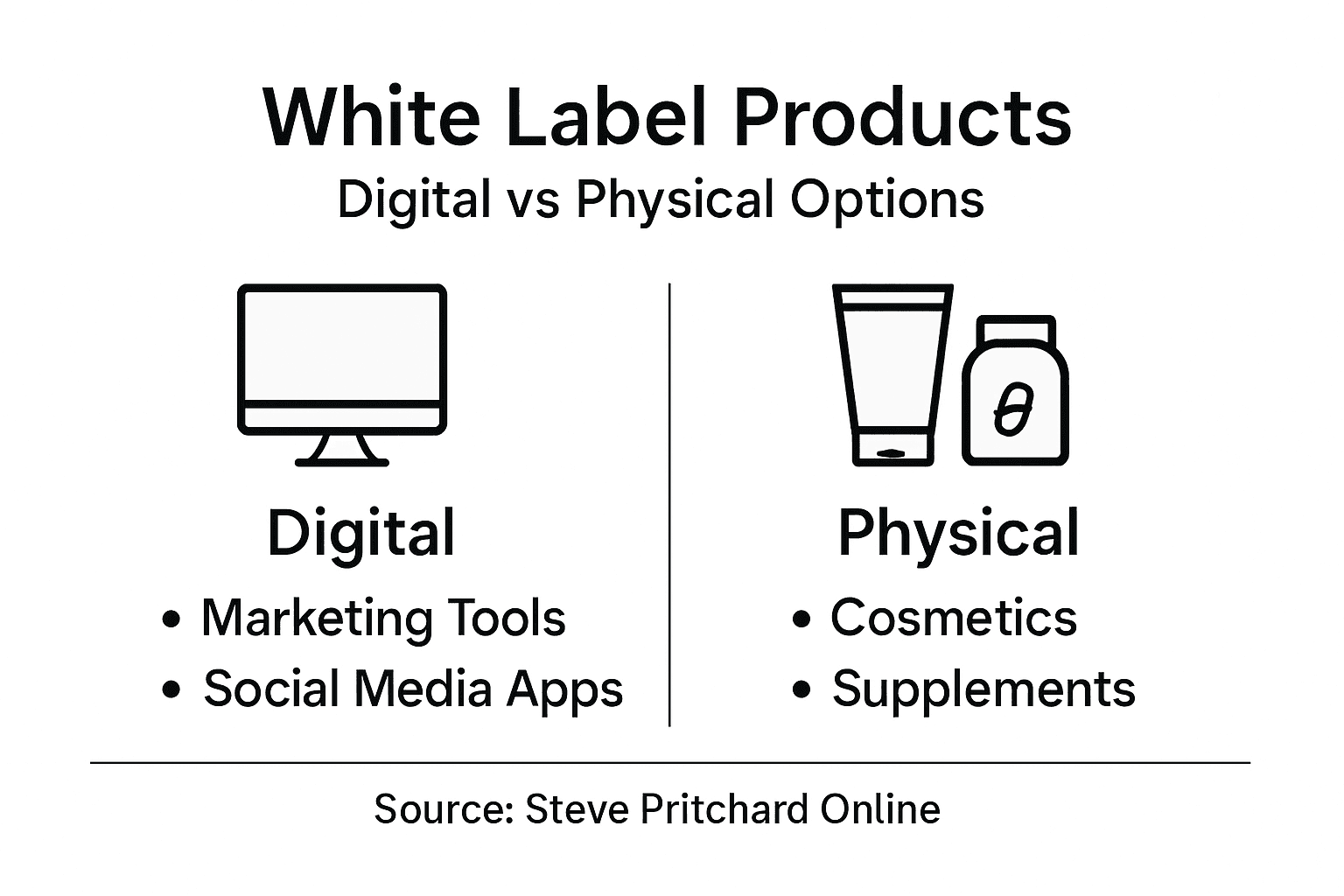
Physical product white labelling extends across numerous sectors such as cosmetics, nutritional supplements, electronics, and clothing. Manufacturers produce standardised products that entrepreneurs can rebrand and market under their own business identity. This approach enables smaller businesses to compete with established brands by offering high-quality products without significant manufacturing overhead. Retailers can customise packaging, develop unique brand narratives, and differentiate themselves in competitive markets.
Pro tip: Research potential white label providers thoroughly, examining their product quality, pricing structure, and customisation options before committing to a partnership.
Here’s a comparison highlighting key differences between digital and physical white label products:
| Aspect | Digital White Label Products | Physical White Label Products |
|---|---|---|
| Initial Investment | Low entry costs | Moderate to high cost |
| Scalability | Highly scalable, easy to expand | Expansion relies on inventory |
| Customisation | Branding and software features | Packaging, visual identity |
| Delivery Timeframe | Instant online access | Shipping and logistics required |
| Profit Margins | Typically higher | Often lower, affected by costs |
How White Label Marketing Models Work
White label marketing models function as a sophisticated business strategy that enables entrepreneurs to offer professional services and products without extensive in-house development. Digital service scaling allows businesses to expand their service offerings rapidly by outsourcing specialised functions while maintaining complete control over branding and customer relationships.

The fundamental mechanism involves a three-part relationship between the original service provider, the white label reseller, and the end customer. The original provider creates the core product or service, which is then rebranded and resold by the entrepreneur. This approach allows businesses to leverage existing expertise and infrastructure without investing substantial time and resources in product development. Common white label models include fully managed services where the provider handles technical implementation, and more hands-on models where the reseller can customise and adapt the offering.
Successful white label marketing requires strategic partner selection, clear contractual agreements, and a deep understanding of target market needs. Entrepreneurs must carefully evaluate potential providers based on product quality, technical support, pricing structures, and compatibility with their brand identity. The most effective white label partnerships create a seamless experience that appears entirely native to the reseller’s brand, with minimal visible involvement from the original service provider.
Pro tip: Develop a comprehensive onboarding and training programme to ensure your team can effectively represent and support the white label products you’re reselling.
Earning Potential and Key Profit Factors
White label marketing presents a significant opportunity for entrepreneurs seeking sustainable passive income streams. Annual earnings potential ranges between £50,000 and £150,000, depending on strategic implementation, product selection, and market positioning. These figures demonstrate the lucrative nature of white label business models for committed entrepreneurs willing to invest time and resources.
Profitability in white label marketing hinges on several critical factors. Successful practitioners focus on optimising pricing strategies, managing operational costs, and developing strong brand positioning. Key considerations include selecting high-demand product categories, negotiating favourable terms with original manufacturers, and creating compelling marketing narratives that differentiate your offerings from competitors. The most successful white label entrepreneurs develop a deep understanding of their target market’s specific needs and pain points.
Earning potential varies significantly across different product categories and industries. Digital services typically offer higher profit margins compared to physical products, with minimal ongoing production costs. Entrepreneurs can amplify their income by diversifying product lines, implementing effective marketing strategies, and building robust customer retention programmes. Additional revenue streams can be generated through upselling, cross-selling, and developing complementary service offerings that enhance the core white label product.
Pro tip: Create a comprehensive financial model that includes projected costs, potential revenue streams, and break-even analysis before committing to any white label partnership.
Legal Issues, Mistakes, and Pitfalls to Avoid
White label marketing requires careful navigation of complex legal landscapes to ensure sustainable business operations. Intellectual property compliance represents a critical consideration for entrepreneurs entering this business model. Potential legal risks include trademark infringement, contractual disputes, and potential regulatory violations that could compromise business credibility and financial stability.
Comprehensive legal protection demands meticulous attention to contractual details and intellectual property rights. Entrepreneurs must develop robust agreements that clearly define ownership, quality standards, and liability parameters with original product providers. Legal frameworks for partnerships should explicitly outline responsibilities, confidentiality requirements, and dispute resolution mechanisms. Common mistakes include inadequate due diligence, ambiguous contract terms, and failure to verify product compliance with local and international regulations.
Key legal pitfalls entrepreneurs should proactively address include understanding jurisdictional variations, securing appropriate licensing, and maintaining transparent communication with original product manufacturers. Potential risks range from product liability claims to potential litigation arising from misrepresentation or quality inconsistencies. Successful white label businesses invest significant time in legal research, consult intellectual property experts, and develop comprehensive risk mitigation strategies that protect both their brand reputation and financial investments.
Pro tip: Engage a specialised intellectual property lawyer to review all white label agreements before signing, ensuring comprehensive legal protection and minimising potential business risks.
Key legal risks and how to mitigate them in white label marketing:
| Legal Risk | Mitigation Strategy | Business Impact |
|---|---|---|
| Trademark infringement | Conduct thorough IP checks | Avoid costly legal disputes |
| Contractual ambiguity | Specify roles and liabilities clearly | Prevent future misunderstandings |
| Regulatory non-compliance | Verify products meet local laws | Maintain business credibility |
| Product liability | Secure comprehensive insurance | Protect financial assets |
Start Your White Label Marketing Journey with Practical Support
White label marketing promises a pathway to unlock passive income streams while bypassing the complexities of product development. Yet many beginners struggle with identifying the right niche, selecting trustworthy providers, and executing effective marketing strategies. If you feel overwhelmed by technical details or uncertain about how to build a profitable brand from someone else’s product, you are not alone. This article’s focus on minimising upfront investment and maximising scalability aligns perfectly with the challenges many new entrepreneurs face today.
At Marketing – Steve Pritchard Online, we specialise in offering digital products designed specifically for people who want to launch or grow online businesses without fuss. Whether you are looking for rebrandable PLR products, AI-powered content tools, or lead-generation assets, our resources help you save time and reduce overwhelm.

Take control of your white label venture with easy-to-use kits and ready-made marketing templates. Visit Steve Pritchard Online now to discover practical solutions that make online business genuinely accessible. There has never been a better moment to step confidently into white label marketing and start earning sooner.
Frequently Asked Questions
What is white label marketing?
White label marketing is a business model where entrepreneurs sell products or services created by another company under their own brand name. This strategy allows for market entry without the need for significant upfront development costs.
How can I choose the right white label products to sell?
Identify niche markets with high demand and low competition. Research potential white label providers, examining their product quality, pricing, and customisation options before selecting products to ensure they meet your target audience’s needs.
What are the advantages of engaging in white label marketing?
Key advantages include minimal initial investment, reduced risk, accelerated business launch timelines, and the ability to focus on marketing and customer relationships rather than product development.
How do profit margins differ between digital and physical white label products?
Digital white label products typically offer higher profit margins due to lower ongoing production costs and ease of scalability, while physical products often involve higher costs that affect profit margins.
Recommended
- Products – AI-Powered Marketing Tools | Steve Pritchard Online
- Free Resources – AI Tools & Guides | Steve Pritchard Online
- Steve Pritchard Online – AI-Powered Affiliate Marketing & Digital Products
- Profit Vault – Premium Subscription | Steve Pritchard Online
- Leading Advertising Platforms for Small Businesses – Expert Comparison 2025
- Unlocking the Secrets of SEO for Small Businesses