Most british businesses struggle to capture buyer interest with generic emails, yet studies show that automated email sequences can increase customer engagement by over 70 percent. In a marketplace crowded with distractions, the ability to deliver personalised, timely messages sets successful brands apart. This look at email sequences reveals how strategic automation empowers marketers to grow relationships, personalise communication, and drive real sales growth without losing the human touch.
Table of Contents
- Defining Email Sequences And Key Concepts
- Types Of Email Sequences For Marketers
- How Automated Email Sequences Drive Sales
- Best Practices For Setting Up Sequences
- Common Pitfalls And How To Avoid Them
Key Takeaways
| Point | Details |
|---|---|
| Email Sequences Enhance Engagement | Automated email sequences allow for strategic, personalised communication to nurture potential customers effectively. |
| Types Serve Distinct Purposes | Different sequence types like Lead Nurturing and Abandoned Cart Sequences cater to specific marketing goals and audience needs. |
| Personalisation is Key | Successful sequences rely on audience segmentation and tailored content to foster meaningful interactions and build trust. |
| Avoid Common Pitfalls | Marketers should steer clear of generic messages and overwhelming frequencies to ensure effective communication and engagement. |
Defining Email Sequences And Key Concepts
An email sequence represents a strategic, automated communication approach designed to engage subscribers through a carefully planned series of targeted messages. These digital communication frameworks are powerful marketing tools that enable businesses to deliver personalised interactions at precisely the right moments in a customer’s journey.
The fundamental purpose of an email sequence centres on nurturing potential customers through systematic, strategic communication. Unlike random, sporadic email broadcasts, these sequences are meticulously crafted to guide recipients through specific stages of engagement. Trigger-based or time-interval driven campaigns can be activated by specific subscriber actions such as:
- Signing up for a newsletter
- Downloading a digital resource
- Abandoning a shopping cart
- Completing a registration process
Successful email sequences leverage automation technology to create personalised, contextually relevant communication pathways. By understanding subscriber behaviour and segmenting audiences, marketers can design intricate communication strategies that feel individual and responsive. The goal is not merely sending emails, but creating meaningful interactions that progressively build trust, demonstrate value, and smoothly guide potential customers towards desired actions.

These sophisticated communication strategies are more than simple message delivery mechanisms. They represent intelligent, adaptive frameworks that transform traditional email marketing from a broadcast model to a nuanced, responsive dialogue. Through carefully sequenced messages, businesses can create compelling narratives that resonate with individual subscriber needs, preferences, and journey stages.
Types Of Email Sequences For Marketers
Email sequences represent versatile marketing tools with multiple strategic applications, each designed to address specific business objectives and customer engagement needs. Specialised sequences are tailored to meet targeted audience segment requirements, enabling marketers to create precise, contextually relevant communication pathways that drive meaningful interactions.
Several critical email sequence types emerge as fundamental strategies for digital marketers:
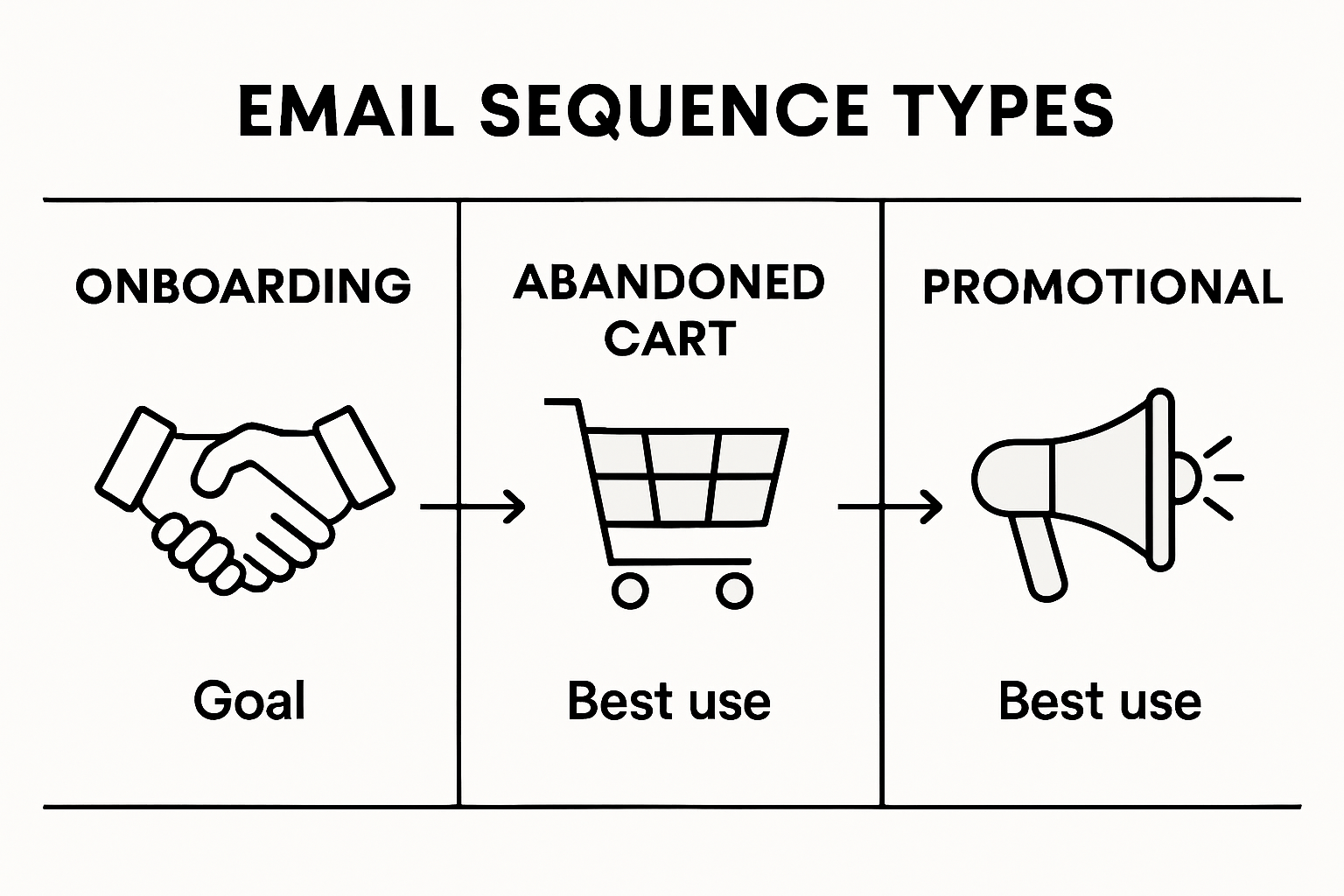
- Lead Nurturing Sequence: Guides potential customers through the sales funnel by providing valuable content that addresses specific pain points and builds trust
- Onboarding Sequence: Welcomes new subscribers or customers, introducing them to brand offerings and core value propositions
- Abandoned Cart Sequence: Targets potential customers who initiated but did not complete purchases
- Post-Purchase Sequence: Maintains engagement after a transaction, encouraging repeat business and collecting feedback
- Re-engagement Sequence: Reactivates dormant subscribers or customers who have not interacted recently
Each email sequence type serves a distinct strategic purpose, allowing marketers to create targeted communication experiences. By understanding the unique characteristics of different sequence types, businesses can develop sophisticated engagement strategies that respond dynamically to subscriber behaviours and preferences.
The effectiveness of these sequences relies on precise segmentation, contextual relevance, and strategic timing. Marketers must craft sequences that feel personalised and valuable, transforming generic email communications into meaningful dialogues that progress subscribers through carefully designed customer journey stages.
How Automated Email Sequences Drive Sales
Automated email sequences transform digital marketing by creating strategic pathways that systematically convert potential customers into committed buyers. Businesses can promote products and services through carefully timed, targeted communication strategies that leverage psychological triggers and precise customer insights.
These sophisticated marketing tools drive sales through multiple strategic mechanisms:
- Creating Anticipation: Generating excitement before product launches
- Personalised Targeting: Delivering contextually relevant offers
- Urgency Generation: Presenting time-sensitive promotions
- Abandoned Cart Recovery: Recapturing potential lost sales
- Relationship Building: Establishing trust through consistent communication
Seasonal campaign sequences particularly excel at generating time-sensitive excitement, compelling customers to act quickly through limited-time offers and exclusive promotions. By crafting sequences that feel personalised and valuable, marketers can transform generic communications into powerful sales conversion mechanisms.
The true power of automated email sequences lies in their ability to create intelligent, adaptive communication frameworks. These sequences go beyond simple message delivery, functioning as sophisticated sales tools that understand customer behaviour, anticipate needs, and guide potential buyers through carefully designed conversion pathways. Through strategic segmentation, precise timing, and contextually relevant messaging, businesses can develop email sequences that not only communicate value but actively drive revenue growth.
Best Practices For Setting Up Sequences
Successful email sequence creation requires a strategic approach that balances technical precision with nuanced audience understanding. Marketers must develop comprehensive frameworks that seamlessly blend automated technologies with thoughtful, personalised communication strategies designed to engage and convert subscribers.
Key strategic considerations for developing effective email sequences include:
- Audience Segmentation: Categorise subscribers based on behaviour, demographics, and interaction history
- Clear Objectives: Define specific goals for each sequence type
- Content Progression: Design a logical flow of information that guides subscribers through a deliberate journey
- Timing Optimization: Carefully space emails to maintain engagement without overwhelming recipients
- Performance Tracking: Implement robust analytics to measure sequence effectiveness
Educational email sequence frameworks demonstrate sophisticated approaches to subscriber engagement, typically incorporating structured elements like:
- An introductory email establishing context
- Detailed topic exploration
- Practical case studies or real-world examples
- Interactive content such as quizzes or surveys
The most successful email sequences transcend simple message delivery, functioning as intelligent communication systems that adapt to individual subscriber responses. By combining data-driven insights with creative storytelling, marketers can craft sequences that feel personalised, valuable, and purposefully designed to address specific customer needs and motivations.
Ultimately, mastering email sequence creation requires continuous experimentation and refinement. Successful marketers approach sequence design as an iterative process, consistently analysing performance metrics, testing different approaches, and remaining responsive to evolving subscriber preferences and behaviours.
Common Pitfalls And How To Avoid Them
Email sequences represent sophisticated marketing tools that can easily become ineffective when fundamental strategic principles are overlooked. Marketers must navigate complex communication landscapes, understanding that even well-intentioned campaigns can fail without careful planning and execution.
Critical pitfalls that frequently undermine email sequence effectiveness include:
- Generic Messaging: Sending identical content to all subscribers
- Overwhelming Frequency: Bombarding recipients with excessive emails
- Lack of Personalization: Failing to segment and target specific audience groups
- Premature Sales Pitches: Pushing products before establishing trust
- Inconsistent Branding: Presenting disjointed communication styles
Successful marketers recognise the importance of tailoring content to specific audience segments, avoiding the fundamental error of creating one-size-fits-all communication strategies. By prioritising value delivery and trust-building before making sales propositions, businesses can create more engaging and effective email sequences.
Ultimately, avoiding these pitfalls requires a holistic approach that combines data-driven insights, strategic segmentation, and a genuine commitment to providing value. Marketers must continuously refine their sequences, viewing them as dynamic communication ecosystems that adapt to changing subscriber preferences and behaviours. The most successful email sequences feel less like marketing tools and more like personalised, helpful conversations that genuinely address recipient needs and interests.
Unlock the Power of Automated Email Sequences to Grow Your Online Income
Understanding how to craft effective email sequences can be challenging. Many struggle with creating personalised, well-timed messages that nurture leads and convert them into loyal customers without overwhelming or alienating their audience. This article highlights key concepts such as segmentation, strategic timing, and trust-building — all essential elements to avoid common pitfalls and unlock sales success.
At Steve Pritchard Online, we provide beginner-friendly digital products designed to take the headache out of automating your email marketing. From AI-powered content tools to done-for-you marketing templates, our practical resources help you build intelligent email sequences that save time and increase revenue. Whether you want to master lead nurturing, abandoned cart recovery, or post-purchase engagement, our shop offers the exact tools you need to transform your email campaigns into powerful sales pathways.
Start automating your communication with confidence today by exploring the digital products and marketing templates. Don’t wait to turn your email list into a proactive sales machine that works for you 24/7. Visit Steve Pritchard Online now and make online income effortless and achievable.
Frequently Asked Questions
What is an email sequence?
An email sequence is a series of automated messages designed to engage and nurture subscribers through targeted communication at various stages of their customer journey.
What types of email sequences are commonly used in marketing?
Common types of email sequences include lead nurturing sequences, onboarding sequences, abandoned cart sequences, post-purchase sequences, and re-engagement sequences, each tailored to achieve specific marketing objectives.
How can automated email sequences boost sales?
Automated email sequences enhance sales through creating anticipation, personalising targeting, generating urgency, recovering abandoned carts, and building relationships with customers through consistent and relevant communication.
What are the best practices for setting up effective email sequences?
Best practices include audience segmentation, setting clear objectives, designing content progression, optimising timing, and implementing performance tracking to continuously refine and improve the effectiveness of the sequences.