Over 60 percent of british businesses say that effective product promotion directly influences their sales growth. Standing out in a crowded market is more than just about having a quality product. Strategic promotion helps brands reach the right people, build trust, and foster lasting relationships. Understanding the purpose and methods behind product promotion will help you uncover the secrets to turning interest into real, lasting customer loyalty.
Table of Contents
- Defining Product Promotion And Its Purpose
- Types Of Product Promotion Methods Explained
- How Product Promotion Works In Practice
- Real-World Applications For Digital Products
- Common Mistakes And Legal Considerations
Key Takeaways
| Point | Details |
|---|---|
| Importance of Product Promotion | It is a strategic process to enhance consumer interest, awareness, and sales, connecting businesses with potential customers. |
| Diverse Promotional Methods | Techniques such as personal selling, digital marketing, and sales promotion are crucial for engaging audiences and driving sales. |
| Holistic Approach Required | Successful product promotion combines strategic planning, creative communication, and performance evaluation to build brand loyalty. |
| Legal Compliance is Essential | Marketers must adhere to ethical standards and transparent communication to maintain consumer trust and avoid legal issues. |
Defining Product Promotion and Its Purpose
Product promotion represents a strategic communication process designed to generate consumer interest, awareness, and ultimately drive sales for specific goods or services. In the expansive world of marketing, product promotion serves as a critical mechanism for businesses to connect with potential customers, highlight unique value propositions, and differentiate themselves from competitors.
At its core, product promotion involves carefully crafted communication strategies that inform target audiences about a product’s merits, benefits, and distinctive features. According to marketing research, promotion is fundamentally about creating meaningful engagement that transforms passive observers into active purchasers. This process encompasses multiple channels and techniques, including:
- Digital advertising campaigns
- Social media marketing
- Content marketing strategies
- Promotional events and demonstrations
- Targeted email marketing
- Influencer partnerships
The primary purpose of product promotion extends far beyond simple sales generation. It plays a multifaceted role in building brand recognition, establishing market positioning, and cultivating long-term customer relationships. Successful promotions create emotional connections that resonate with consumers, transforming transactional interactions into meaningful brand experiences.

Marketing professionals understand that effective product promotion requires a nuanced approach that balances informative communication with compelling storytelling. By strategically presenting a product’s unique value and addressing specific consumer needs, businesses can create powerful promotional campaigns that not only drive immediate sales but also establish lasting brand loyalty and market presence.
Types of Product Promotion Methods Explained
Product promotion encompasses a diverse array of strategic communication techniques designed to engage potential customers and drive sales. Marketing professionals utilise multiple sophisticated approaches to create compelling promotional experiences that resonate with target audiences and generate meaningful consumer interactions.
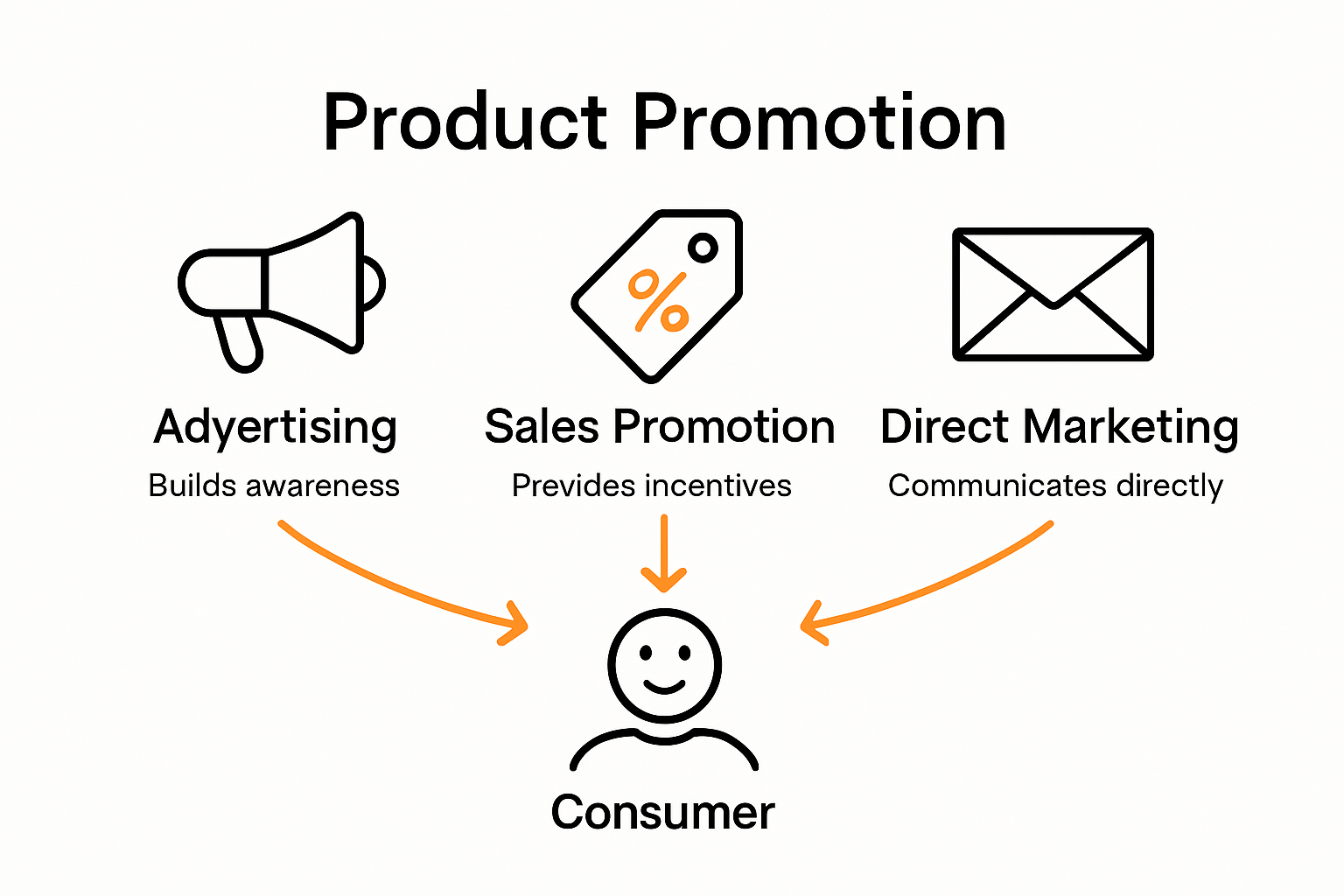
According to marketing research, the promotional mix comprises several distinct yet interconnected methods, each serving a unique purpose in the customer engagement ecosystem. These comprehensive promotion strategies include:
- Personal Selling: Direct, interpersonal communication between sales representatives and potential customers
- Advertising: Paid, non-personal communication through various media channels
- Sales Promotion: Short-term incentives designed to stimulate immediate product interest
- Direct Marketing: Targeted communication sent directly to specific consumer segments
- Publicity: Non-paid media coverage and public relations activities
- Digital Marketing: Online promotional strategies leveraging internet platforms
Each promotional method offers distinctive advantages and can be strategically combined to create powerful, multi-channel marketing campaigns. Digital platforms have dramatically expanded the potential reach and precision of product promotion, enabling businesses to craft highly targeted, personalised communication strategies that speak directly to consumer preferences and behaviours.
Successful product promotion requires a nuanced understanding of audience demographics, communication channels, and evolving market dynamics. By carefully selecting and integrating appropriate promotional methods, businesses can create compelling narratives that not only showcase product features but also build meaningful connections with potential customers, ultimately driving brand awareness, engagement, and sales performance.
How Product Promotion Works in Practice
Product promotion operates as a sophisticated strategic process that transforms marketing concepts into tangible consumer interactions. Businesses leverage multiple interconnected mechanisms to create compelling narratives that drive consumer engagement and purchasing decisions.
Research indicates that firms invest substantially in sales promotions, recognising their critical role in driving product visibility and short-term sales performance. Sales promotion strategies are particularly nuanced, requiring careful design and implementation to maximise their potential impact. The practical execution of product promotion typically involves:
- Identifying target audience demographics
- Developing clear communication objectives
- Selecting appropriate promotional channels
- Crafting persuasive messaging
- Designing attractive incentives
- Measuring and analysing promotional outcomes
Understanding consumer perception remains paramount in effective product promotion. Different promotional techniques can yield varying results across different market segments, requiring marketers to develop flexible, data-driven approaches that adapt to changing consumer preferences and behaviours.
Successful product promotion demands a holistic approach that integrates strategic planning, creative communication, and continuous performance evaluation. By combining analytical insights with innovative marketing techniques, businesses can create promotional campaigns that not only capture consumer attention but also generate meaningful engagement and sustainable sales growth.
Real-World Applications for Digital Products
Digital product promotion has revolutionised how entrepreneurs and marketers connect with potential customers, creating unprecedented opportunities for targeted, cost-effective marketing strategies. Online marketplaces have transformed the landscape of product promotion, enabling creators to reach global audiences with minimal overhead.
E-commerce platforms have dramatically enhanced promotional capabilities, particularly for digital products. Promotions and discounts represent sophisticated tools for incentivising customer purchases, requiring nuanced strategic approaches to maximise their effectiveness. Key digital product promotion applications include:
- Targeted email marketing campaigns
- Social media advertising
- Affiliate marketing programmes
- Webinar and live streaming demonstrations
- Limited-time promotional offers
- Free trial and freemium model strategies
- Influencer partnership initiatives
Successful digital product promotion demands a sophisticated understanding of audience segmentation, technological platforms, and consumer psychology. Marketers must craft personalised experiences that communicate unique value propositions while addressing specific customer pain points and desires.
The digital ecosystem offers unprecedented flexibility for product promoters, allowing real-time performance tracking, instant customer feedback, and rapid campaign adjustments. By leveraging data-driven insights and innovative communication strategies, digital product creators can develop promotional approaches that not only attract initial interest but also cultivate long-term customer relationships and sustainable growth.
Common Mistakes and Legal Considerations
Product promotion requires a delicate balance between persuasive marketing and strict legal compliance. Businesses must navigate complex regulatory landscapes that demand transparency, ethical communication, and consumer protection.
Promotional strategies must adhere to rigorous legal and ethical standards to maintain consumer trust and avoid potential litigation. Marketing practices intersect critically with public policy, requiring marketers to develop sophisticated understanding of regulatory frameworks. Common mistakes in product promotion include:
- Making unverifiable performance claims
- Misrepresenting product capabilities
- Failing to disclose complete pricing information
- Using deceptive comparative advertising
- Overlooking data protection regulations
- Neglecting accessibility standards
- Ignoring intellectual property rights
Ensuring promotional transparency represents a fundamental legal requirement. Marketers must craft communications that provide accurate, verifiable information while avoiding manipulative tactics that could mislead consumers or breach regulatory guidelines.
Successful product promotion demands a proactive approach to legal compliance, combining strategic marketing insights with robust ethical considerations. By developing comprehensive understanding of relevant regulations and maintaining unwavering commitment to honest communication, businesses can create promotional campaigns that not only drive sales but also build long-term credibility and consumer confidence.
Unlock Practical Tools to Master Product Promotion and Grow Your Online Income
Struggling to turn your product promotion ideas into engaging campaigns that truly connect with your audience We understand that crafting compelling promotional strategies can feel overwhelming especially when juggling everyday life and aiming to build a sustainable income. This guide highlighted key challenges like targeting the right audience creating persuasive messaging and leveraging multiple promotional channels—all essential skills for effective marketing success
At Steve Pritchard Online we simplify these complex marketing tasks with beginner-friendly digital products designed to help you start growing and automating your online income streams. From AI-powered content tools to marketing templates and lead-generation assets you get exactly what you need to save time reduce overwhelm and build meaningful customer connections that convert. Explore our range of proven resources crafted for busy people who want no hype just practical solutions that work
Ready to transform your promotional efforts into real online earnings
Discover how our tools can accelerate your journey today by visiting Steve Pritchard Online and start turning your marketing potential into profit now
Frequently Asked Questions
What is the main purpose of product promotion?
The main purpose of product promotion is to generate consumer interest and awareness, drive sales, build brand recognition, and establish long-term customer relationships through effective communication strategies.
What are some common methods used for product promotion?
Common methods of product promotion include personal selling, advertising, sales promotions, direct marketing, publicity, and digital marketing. Each method plays a unique role in engaging target audiences effectively.
How do I measure the success of a product promotion campaign?
To measure the success of a product promotion campaign, businesses can analyse metrics such as sales performance, customer engagement levels, conversion rates, and overall return on investment (ROI) from the promotional activities.
What are the potential legal considerations in product promotion?
Legal considerations in product promotion include ensuring truthful communication, avoiding misleading claims, adhering to data protection regulations, and respecting intellectual property rights. Transparency and ethical standards are crucial to maintaining consumer trust.